Before anyone gets started in college it's a good idea to do a bit of research. I know I would have thought differently about the military if I'd done a little work ahead of time to find out what the hell I was in for after raising my right hand. Even if you're already enrolled, you should read this to remind yourself of the bigger picture.
There are four basic components to the higher education system in California. That's a lot of moving parts but trust me, you're better off here as a student veteran than just about anywhere else (despite the awful mess the government is in).
Component #1: Community College. These are two year schools offering anything from vocational training to preparation courses for four year schools. There are over 100 of these in the state, so finding one nearby isn't much of a challenge unless you live alone with your german shepherds and video surveillance cameras in the woods.
More CC info is available at http://www.cccco.edu
Component #2: California State University. These are four year schools often referred to as CSUs. So the CSU in San Francisco is called CSU-San Francisco or San Francisco State. 23 of these campuses are spread around California, offering full Bachelor's degrees in all kinds of stuff. Their degrees are often more applicable to the real world than the next group.
More CSU info is available at http://www.calstate.edu
Component #3: University of California. This system is more for the guys who wear glasses and can't PT. The UC campuses are the hardest to get accepted into, the most expensive, and are usually a stepping stone to white-collar jobs (think Office Space) or a graduate degree. That said, all it takes is hard work and a willingness to listen to 18 year-olds lecture you about Iraq.
More UC info is available at http://www.universityofcalifornia.edu
Component #4: Private Colleges and Universities. These vary across the board from religious schools to small liberal arts colleges to places like Stanford that compete more with the UC system. You can enter these directly-which requires good high school grades and test scores-or transfer from a CC.
So why is Cali such a good place to be? Because the system is set up so you can attend #1 (cheap) for two years then transfer to #2 or #3 (expensive) to finish your degree. Also, #1 can be used to get an two year or vocational degree to help get a job--cop or EMT, for instance.
Think of these systems like basic training. #1 is boot camp, which leads to A-schools #2, 3, 4, or directly into a job, depending on what you're thinking about doing for a career. The important thing is thinking about what plan makes sense for you. I'll follow up with more information about each system after a few more posts on the basics of higher education in California as a veteran.


Who am I?
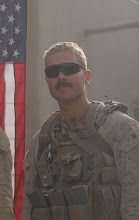
- William Treseder
- I'm a Marine - Iraq and Afghanistan veteran. I left the Corps and attended West Valley College in Saratoga, CA for two years and then transferred to Stanford University, where I am finishing a degree in Science, Technology, and Society.
No comments:
Post a Comment